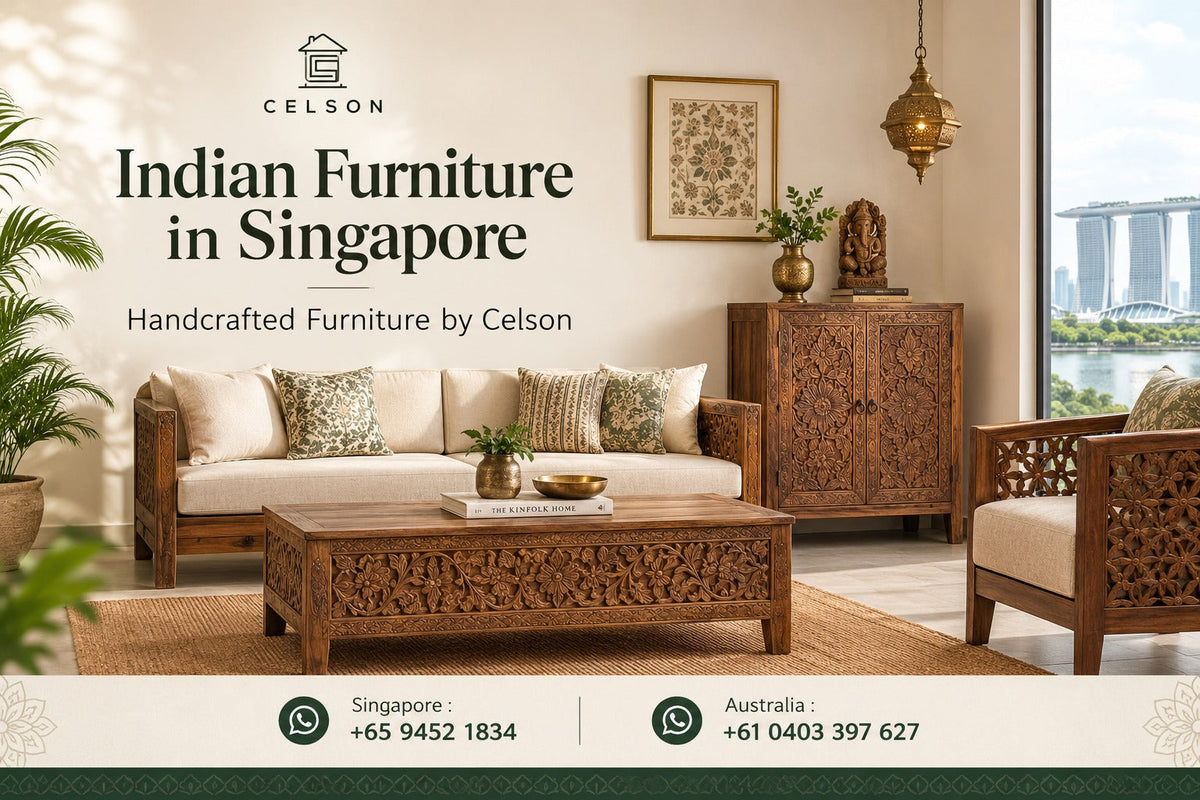
Indian Furniture in Singapore | Handcrafted Furniture by Celson
Some furniture simply fills a space. Other pieces become part of the way a home feels—the dining table where the family gathers, the cabinet that holds favourite crockery, or the console you see each time you walk through the door. When choosing furniture, that connection matters just as much as colour and size.
For anyone looking for Indian furniture in Singapore, the attraction often begins with the warmth of wood and the detail of handcrafted work. But a successful purchase involves more than finding a beautiful design. The piece also needs to fit your room, support your everyday routine and work comfortably with the furniture you already own.
Handcrafted furniture by Celson offers a starting point for homeowners who want to bring Indian design into their living spaces. Whether your taste is traditional or contemporary, the aim is to choose pieces that feel considered, useful and personal.
The Appeal of Indian Furniture Goes Beyond Carving
Indian furniture does not belong to one single style. It can be decorative and substantial, with carved panels and shaped legs, or understated, with clean outlines that allow the material to take centre stage.
This variety is useful when furnishing a modern home. You might enjoy the character of a detailed sideboard but prefer a simpler dining table. Those choices can work together without making every room look alike.
Part of the appeal of handcrafted work lies in the details you notice over time: the shape of an edge, the depth of a carved pattern or the way the finish reveals the grain. These details give a piece visual interest without requiring additional decoration.
However, handmade character should accompany good workmanship. Doors should align properly, drawers should move smoothly and the furniture should stand securely. Natural variation in wood is different from a construction fault, and buyers should feel comfortable asking about both.
Start with Your Room and Daily Routine
Before browsing Indian furniture in Singapore, think about the problem you want a new piece to solve.
Do you need a dining table for daily family meals? A cabinet that keeps serving dishes close at hand? A console for an entrance that currently feels unfinished? A clear purpose makes it easier to compare designs and avoid choosing something that looks appealing but does little for the room.
In Singapore homes, usable space deserves particular attention. An HDB living room may also accommodate dining, homework and family activities. A condominium may have an open layout where several furniture pieces are visible at once. A larger home may need substantial pieces to make generous rooms feel balanced.
Measure more than the empty space where the furniture will stand. Include the area needed to open doors, extend drawers, pull out chairs and walk past comfortably. Marking the footprint on the floor with removable tape can help you judge its effect before ordering.
Choosing Indian Furniture for the Living Room
The living room is often the easiest place to introduce a handcrafted piece because it does not require a complete change of style.
A wooden coffee table can bring warmth to a plain seating arrangement. A cabinet can provide storage while adding detail to a quiet wall. A console behind a sofa can help define different areas in an open room.
Balance Decorative Detail with Everyday Use
If you choose a piece with prominent carving, give it enough visual space. Placing several strongly patterned items close together can make individual details harder to appreciate.
Consider maintenance as well. An intricate surface may need more careful dusting than a flat one. For furniture used frequently, think about whether the design makes cleaning, access and everyday handling straightforward.
Coffee tables deserve a practical check. Compare their height with the sofa seat, make sure the surface is easy to reach and consider how the edges sit within a busy walkway.
Make Storage Match What You Own
A beautiful cabinet becomes more useful when its internal layout suits your belongings.
For books, check shelf depth and the stated load capacity. For crockery, consider the height of serving bowls and stacks of plates. If you want to store electronic equipment, ask about cable access and ventilation rather than assuming a decorative cabinet is suitable.
These details are easy to overlook in photographs but make a noticeable difference after the furniture arrives.
Selecting a Dining Table You Will Enjoy Using
A dining table should be chosen around the people who use it most often. Occasional entertaining matters, but daily comfort should guide the decision.
Start with your usual household seating needs. Then look at the table’s shape, leg positions and available space around it.
A rectangular table may suit a longer dining area, while a round table creates a different seating arrangement and circulation pattern. Neither shape is automatically better for a small room; the surrounding layout determines what works.
Check the Table and Chairs Together
The overall table dimensions do not tell the whole story. Legs and supporting structures can affect where chairs fit and how much knee room is available. An apron beneath the tabletop may also limit whether an armchair slides underneath.
If you are keeping your existing chairs, share their measurements when enquiring. If you are buying a complete set, ask about seat height, under-table clearance and the space available between place settings.
Understand the Finish Before Buying
A dining surface faces spills, warm dishes and repeated cleaning. Ask what finish has been applied and how it should be maintained.
Do not assume that a wooden tabletop is resistant to heat or water because it looks substantial. Coasters, placemats and prompt spill cleaning may still be necessary. The right choice is one whose care requirements fit your household.
Bringing Indian Design into the Bedroom
A bedroom usually benefits from a more restrained arrangement. One expressive piece—a bed frame, chest of drawers or pair of bedside tables—can establish the character of the room.
If a bed has a detailed headboard, simpler bedding can make the craftsmanship easier to appreciate. For a room with limited floor space, consider how the bed frame’s external dimensions affect movement around the mattress.
Confirm mattress compatibility using actual measurements. Size names alone may not provide enough information, particularly when comparing products from different markets.
For bedside furniture, check the height against the top of your mattress. For wardrobes and chests, allow room to open doors and drawers fully. These checks help the room remain comfortable after the main pieces are installed.
How to Mix Indian Furniture with a Contemporary Interior
You do not need an entirely traditional home to enjoy Indian furniture in Singapore. A single handcrafted piece can work well within a modern interior when its scale, colour and placement are considered.
A detailed wooden sideboard can sit comfortably beside a simple sofa. A traditional dining table can be paired with understated upholstered chairs. A carved console can become a focal point against an uncluttered wall.
The connection between pieces does not have to come from matching designs. It might come from warm colour undertones, similar proportions or a material repeated elsewhere in the room.
Avoid choosing every item in isolation. Look at photographs of your existing furniture together with the piece you are considering. This helps you assess whether the combination feels balanced before committing.
Materials and Workmanship: Questions Worth Asking
Appearance is only part of furniture quality. When comparing pieces, ask how they are made and which materials are used in each component.
Clarify the Construction
“Wooden furniture” can describe several types of construction. Ask whether the top, frame, doors, shelves and back panels use solid wood, veneer, engineered wood or a combination.
Different materials can serve different purposes. What matters is receiving an accurate description and understanding whether the construction suits the intended use.
Look Beyond the Front View
Request photographs of the interior, back, underside and fittings where relevant. These views can help you understand storage arrangements, assembly requirements and the attention given to less visible areas.
Ask about stability, hardware and any care needed for moving parts. For tall storage furniture, clarify whether wall anchoring is required and how installation should be handled.
Understand Variations in Handcrafted Pieces
Wood grain and colour may vary between pieces, and handmade detailing may not be identical in every example. Ask whether product photographs show the actual item or a representative design.
Where colour matching is important, request additional photographs or an available finish sample. Lighting and screen settings can affect how a finish appears, so a single image should not be treated as an exact colour reference.
Caring for Wooden Furniture in Singapore
Singapore’s humid environment makes sensible placement and consistent care relevant to wooden furniture. Wood can respond to changes in moisture, and care requirements depend on the material, construction and finish.
Keep indoor furniture away from locations regularly exposed to rain, standing moisture or prolonged direct sunlight. Wipe spills promptly and avoid leaving damp objects on wooden surfaces.
For routine cleaning, follow the supplier’s instructions. A product suitable for one finish may be unsuitable for another, so avoid applying an unfamiliar polish or household cleaner without checking first.
Good habits also help: lift furniture when moving it, avoid overloading shelves and protect frequently used surfaces. Ask Celson for care guidance specific to the piece you select.
Plan Delivery Before Placing Your Order
A piece may fit the room but still be difficult to bring into the home.
Measure the access route, including the main doorway, lift opening, corridors and tight turns. Check whether the furniture arrives assembled or in sections, and confirm its packaged dimensions when access is restricted.
For condominium deliveries, check any management requirements for delivery hours, lift bookings or access arrangements. Share relevant restrictions before scheduling.
Before ordering, confirm the final dimensions, materials, finish, delivery charges, assembly scope, estimated timing and applicable after-sales terms. Clear written details make the purchase easier to manage.
Find the Right Piece with Celson
Choosing Indian furniture in Singapore is an opportunity to create a home with warmth and individuality. The best piece is one you appreciate visually and enjoy using—a table that supports everyday meals, storage that makes a room easier to live in or a handcrafted detail that gives a familiar space new character.
When contacting Celson, share the type of furniture you need, your room measurements and a few photographs of the space. Mention your preferred finish, existing furniture and any delivery limitations. This gives the discussion a useful starting point.
To enquire about handcrafted furniture by Celson, available designs and product details, get in touch.
Singapore: +65 9452 1834